Fashion Battle - Dress up game
- 4.4
- Rating
- 50.00M
- Installs
- Free
- Price

 Analysis by App-foxy
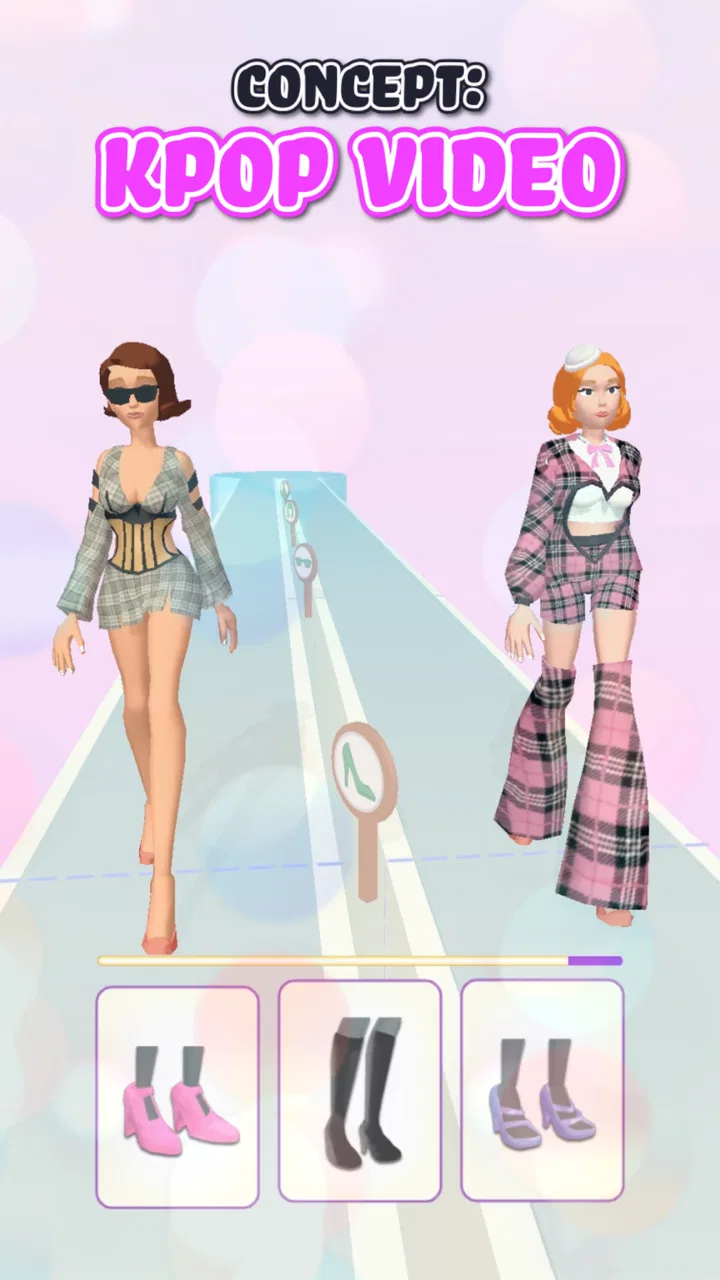
Fashion Battle - Dress up game is the kind of role-playing game I open when I want something quick, visual, and easy to understand. Instead of asking me to learn a complicated combat system or follow a long story, it puts the focus on styling an outfit and presenting a look for a fashion challenge. That makes it approachable, but it also means the enjoyment depends heavily on whether I like making appearance-based choices and repeating short makeover sessions.
I found it best viewed as a casual fashion game rather than a full role-playing adventure. The free download removes the biggest barrier to trying it, while optional purchases ranging from $3.99 to $9.49 per item can affect how carefully I manage my spending. The game is rated for Everyone, runs on devices using iOS 11 or later, and the current version is 1.39.00. Those details make it a fairly accessible choice for families and casual players, although younger users may still need guidance around purchases.
Fashion Battle - Dress up game review: setup, styling flow, and everyday use
I’ll focus on how the game’s fashion-show framing turns outfit selection into a quick, readable challenge, and where that simplicity may or may not suit your play style. I’ll also look at the practical choices that make a short session smoother, so you can decide whether its styling rhythm fits the way you like to play.
You May Also Like

 Blood Strike: 2.5 Anniversary
Blood Strike’s Loadouts Turn Every Drop Into a Tactical Gamble
A close look at Blood Strike’s custom loadouts: how fast access to signature weapons reshapes its battle royale rhythm, rewards preparation, and narrows the gap between fights.

 Pandora - Music & Podcasts
Pandora’s Music Is Easy to Start, but Harder to Recover
Pandora’s strength is its low-effort path from a seed to a station. Its weak spot is how much confidence it asks you to place in connection, setup, and quiet recovery.

 8 Ball Pool
 Is Built on Rivalries, Rematches, and Routine
A close look at the rivalries, rematches, shared routines, and unanswered safety questions that turn a quick pool match into a persistent mobile community.

 Samsung Music
’s Quiet Strength Is Playing What You Already Own
Its reach comes less from spectacle than from dependable access to a personal library. That simplicity is both the app’s strongest retention engine and its ceiling.

 AccuWeather: Weather Radar
AccuWeather Review: A Quick, Clear Forecast for Everyday Decisions
For everyday plans, the best forecast is the one you can understand quickly. AccuWeather makes rain timing, radar, and local conditions easy to act on, with a few trade-offs.

 Hill Climb Racing
Why Hill Climb Racing Still Turns Crashes Into One More Run
A tiny car, a bumpy hill and one more upgrade: Hill Climb Racing keeps resurfacing because its simple chaos makes every near-miss feel personal.
More From Our News Desk
View All News


Where the first friction usually appears
The opening appeal is immediate: I can start thinking about clothes, colors, and the overall impression of a model without first mastering a dense tutorial. That simplicity is useful when I only have a few minutes. It also creates the first possible frustration, because the game’s value depends on how much I enjoy judging visual combinations rather than controlling a character through exploration or action.
If you expect a traditional role-playing game with deep character statistics, branching conversations, or a large world to investigate, this is not the right expectation. Its role-playing label is expressed through the makeover and fashion-show fantasy. I am making decisions for a styled character and trying to produce a convincing final look, but the pleasure comes from presentation and comparison instead of adventure mechanics.
The developer is Apps Mobile Games, and the game has built a large audience: it has passed 50 million installs, with a 4.4 average from around 211 thousand ratings. That level of adoption makes it easier for me to understand why the format works for many people, but popularity does not remove the need to check whether the visual challenge itself suits my taste.
On a normal first session, I would recommend resisting the urge to choose the first item that looks attractive on its own. A dramatic dress, bright accessory, or unusual hairstyle can be appealing in isolation but may not fit the theme of the challenge. I get better results by deciding on a general direction first: elegant, relaxed, bold, playful, or formal. Then I choose pieces that support that direction instead of competing with one another.
Setup checks before blaming the game
Because this is a free game with optional purchases, I would begin by checking the device’s operating-system requirement and the account used for downloads. The minimum supported system is iOS 11, so an older device may be the first thing to investigate if installation or updating stops before the game opens. This is a more useful first check than repeatedly tapping the download button.
I also like to leave enough free storage for the installation and its updates. Even when an app itself is not unusually demanding, a nearly full phone can cause confusing behavior: an update may appear to stall, the installation may fail, or the game may close while loading. Freeing space, restarting the device, and trying again is a sensible sequence before assuming that the game is broken.
Another practical check is the network connection. A fashion game may feel like something that should work entirely offline, but installation, updates, account services, or purchase verification can still depend on a stable connection. If the game opens but a particular screen does not finish loading, I would switch between Wi-Fi and mobile data, then retry once rather than repeatedly pressing the same control.
Families should also prepare for the purchase layer before handing the phone to a child. The age rating is Everyone, which makes the presentation broadly accessible, but the game still offers paid items. I would set purchase approval or device-level restrictions in advance. That is not a criticism of the styling loop; it is simply the sensible way to let a child enjoy a free fashion game without turning an accidental tap into an unwanted expense.
The version number is another useful detail when troubleshooting. The current release is 1.39.00, so I would check whether the installed copy is current before spending time on more complicated fixes. If an update is waiting, installing it and restarting the game can resolve a loading problem more cleanly than deleting the app immediately.
A better workflow for winning the styling challenge
My preferred workflow begins with the challenge itself, not the individual clothing pieces. I first identify what the look seems to ask for, then create a simple visual hierarchy. One item should usually act as the focus, while the rest of the outfit supports it. If the dress is already elaborate, I keep the accessories quieter. If the clothing is simple, a stronger accessory or hairstyle can give the look a clear identity.
This approach matters because a closet full of attractive items can make decision-making slower, not easier. I have found it helpful to compare two complete outfits rather than judging every item separately. A jacket may seem perfect until I see it with the chosen shoes. A hairstyle may look fashionable but distract from the outfit’s silhouette. Looking at the whole model before committing is one of the easiest ways to avoid a mismatched final result.
Color coordination is another place where a small adjustment can change the result. I do not try to make every item the same color. Instead, I choose one main color, one supporting shade, and perhaps a small accent. This keeps the look readable on a phone screen. Very similar shades can disappear into one another, while too many strong colors can make the outfit feel accidental rather than styled.
There is also a useful time-management trick for short sessions. I make a fast first pass using the most suitable items, then spend the remaining time changing only one category at a time. For example, I might test several hairstyles without touching the clothing, then compare accessories. This prevents me from losing track of which change improved the look and makes the process feel more deliberate.
The fashion-show framing gives the game a social-comparison feeling even when I am playing alone. That can be motivating, but it can also make a disappointing result feel more personal than it really is. I try to treat each round as a styling experiment. If a look performs poorly, I ask whether the problem was the color balance, the formality, or the lack of a clear focal point. That turns a loss into a practical lesson instead of a reason to spend money immediately.
Recovering when a session does not behave normally
When the game freezes, closes, or leaves me on a screen that does not respond, I use the least disruptive recovery steps first. I close the app completely, reopen it, and check the connection. If the problem continues, I restart the phone. These steps sound basic, but they clear temporary issues without risking local progress or forcing me to repeat the entire setup.
I would avoid deleting the game as an early reaction. Reinstalling can remove local information or create a new setup problem, especially if I am unsure how progress is connected to the device or account. Before taking that step, I would confirm that the app is updated, that the phone has enough storage, and that other apps are not also failing. If several apps are unstable, the cause is more likely to be the device or operating system than this particular fashion game.
Purchase-related trouble deserves a separate approach. If an item does not appear after a transaction, I would not buy it again immediately. I would first confirm that the purchase completed through the device’s normal account system, reopen the game, and allow time for the transaction to synchronize. Repeating the purchase while the first one is still processing can create unnecessary confusion. Keeping a record of the transaction is also sensible if support is needed.
If a challenge screen appears incomplete or a visual element loads incorrectly, I would try leaving that section and returning to it after restarting the app. A temporary loading failure can look like missing game content even when the issue is only a stalled connection. I would also avoid changing several device settings at once, because it becomes difficult to tell which action actually helped.
These recovery habits are especially important for children. A child may interpret a frozen screen as a reason to tap repeatedly, close the app, or request a new purchase. Showing them a simple routine—stop tapping, tell an adult, check the connection, and reopen the game—prevents a small technical issue from becoming a larger one.
When the app is not the real cause
Not every disappointing session points to a software problem. Sometimes the game feels repetitive because the player is looking for a different kind of role-playing experience. Compared with story-focused adventures, strategy games, or character-building titles, this one offers a much narrower fantasy: the satisfaction comes from assembling and presenting looks. If I want exploration, tactical decisions, or a long narrative, I would choose another category instead.
Device performance can also shape the experience. An older phone that struggles with other visually rich apps may take longer to load or close unexpectedly here as well. Testing the device after closing background apps and restarting it can help separate a game-specific issue from general system strain. If the phone is low on space or running an outdated operating system, replacing the device is not necessary as a first response; basic maintenance may be enough.
Network conditions are another common source of confusion. A weak connection can make a screen appear empty, delay account checks, or interrupt an update. I would test the game at a different location or on another trusted connection before concluding that a feature is unavailable. This is particularly useful when the rest of the phone works normally but only online-dependent screens behave strangely.
There is also a personal preference issue that no troubleshooting step can solve. The game’s fashion focus may be great for someone who enjoys experimenting with outfits, but it will not become a satisfying action game through better settings or a faster connection. Players who dislike repeated visual comparisons should skip it rather than hoping later progress will transform the core loop.
How it compares with familiar alternatives
Against a conventional dress-up app, this game has a stronger sense of challenge because styling is framed around a fashion battle rather than only creating a private outfit. That competitive structure gives my choices more purpose. I am not merely decorating a character; I am trying to make a look that fits the situation and stands out in the right way.
Against a story-heavy role-playing game, however, it is much lighter. There is less reason to return for narrative discovery, and the main satisfaction comes from visual decisions. Someone who wants dialogue, exploration, equipment management, or a long-term character arc may find a standard role-playing title more rewarding. Someone who wants a quick makeover session will probably appreciate the shorter learning curve here.
It also differs from purely creative avatar editors. An editor gives me freedom to make whatever I like, while a battle format encourages me to think about suitability and presentation. That constraint can make the game more engaging, but it can also feel limiting when I have a very specific outfit in mind that does not match the current challenge.
The free entry point is helpful for testing that distinction. I can try the basic experience before deciding whether the format deserves more of my time. Still, I would not treat optional purchases as a shortcut to better styling judgment. Spending on an item may expand choices, but it does not replace the need to coordinate the full look. I would only consider a purchase after I know I enjoy the core sessions and have set a clear budget.
Who will enjoy it, and who should skip it
I would recommend this game to players who like fashion themes, quick creative decisions, and the small satisfaction of improving a complete outfit. It can work well during a commute, a short break, or a relaxed evening when I want interaction without a demanding story. The Everyone rating also makes it approachable for families, provided an adult handles purchase settings.
A realistic everyday scenario would be a parent letting a child play for a few minutes after homework. The child can choose a theme, build an outfit, and show the final result without needing to understand complicated controls. I would supervise the first sessions, explain that paid items are optional, and make sure purchase approval is active. That gives the game a clear boundary instead of letting it become an unplanned shopping activity.
I would be less likely to recommend it to someone with limited patience for repeated makeover rounds, or to a player who wants deep progression and a substantial narrative. It is also not my first choice for someone who prefers offline certainty, because installation, updates, and some parts of the experience can be affected by connection or account issues. In those cases, a simpler offline dress-up title or a story-driven game may be a better fit.
My practical verdict
Fashion Battle - Dress up game succeeds when I approach it as a compact styling challenge rather than a traditional adventure. The visual decisions are easy to grasp, the fashion-show framing gives them a reason, and the free price makes experimenting low-risk. Its audience size—more than 50 million installs and roughly 9.7 thousand written reviews—also reflects how accessible the concept is, while the 4.4 average suggests that many players find the loop enjoyable.
My strongest advice is to set up the device properly, protect purchases, and build outfits as complete combinations instead of chasing individual items. When something goes wrong, I would check the operating system, storage, connection, update status, and device stability before reinstalling. Those checks address the most likely sources of friction without risking progress unnecessarily.
The main trade-off is focus. This is a fashion battle game, and it stays close to that idea. I enjoy it most when I want a short creative task with a visible result. I would skip it when I am in the mood for exploration, combat, or a story that develops over many sessions. If your idea of fun is turning a theme into a polished outfit, this free role-playing game is worth trying; if you need deeper role-playing systems, choose a different kind of game.
Overall, I see it as an approachable recommendation for casual fashion fans, children playing with sensible supervision, and anyone who enjoys comparing small visual choices. The best experience comes from treating each round as a design problem, keeping purchases intentional, and accepting that its narrow fashion focus is both its biggest strength and its clearest limitation.
FAQs for Fashion Battle - Dress up game
01What is the main objective of Fashion Battle - Dress up game?
Fashion Battle - Dress up game is designed to challenge players to create the most stylish and trendsetting outfits. Players compete against others in various fashion challenges, showcasing their creativity and style sense. The main goal is to win fashion battles by impressing the judges with your unique fashion combinations.
02How do I earn rewards in Fashion Battle - Dress up game?
Players earn rewards by successfully completing fashion challenges and battles. Winning these challenges allows you to unlock new clothing items, accessories, and even exclusive content. The more battles you win, the more fashionable items you can collect to enhance your wardrobe and improve your chances in future battles.
03Is Fashion Battle - Dress up game suitable for all ages?
Fashion Battle - Dress up game is generally suitable for a wide range of ages, offering fun and creativity for both young players and adults interested in fashion. However, it’s always recommended for parents to review the game’s content to ensure it aligns with their expectations regarding age-appropriateness.
04Can I play Fashion Battle - Dress up game with my friends?
Yes, Fashion Battle - Dress up game includes social features that allow you to connect with friends. You can compete against them in fashion challenges or showcase your outfits to get feedback. This interactive element makes the game more engaging and competitive, enhancing the overall experience.
05Are there in-app purchases in Fashion Battle - Dress up game?
Fashion Battle - Dress up game does offer in-app purchases. These can range from special clothing packs to exclusive accessories and enhancements. While these purchases can enhance gameplay and provide additional customization options, they are entirely optional, and players can enjoy the game without spending real money.
Pros
- Engaging gameplay with diverse fashion challenges.
- Wide selection of clothing and accessories.
- Intuitive controls make it easy to navigate.
- Regular updates with new outfits and themes.
- Encourages creativity in style combinations.
Cons
- In-app purchases can be costly.
- Ads can interrupt gameplay frequently.
- Requires internet connection to play.
- Limited customization for character features.
- Some outfits are locked behind a paywall.

Fashion Battle - Dress up game
Gallery